When my son was only 18 months old, he fell and cut a huge gash into his tiny shin. I will never forget that day, carrying him down our steep driveway, putting him into our Explorer and rushing him to the ER. My sweet neighbor had seen me and, unknowingly to me, followed along to make sure we were ok. (To this day, people and moments like that are the ones you really remember. KINDNESS.) That cut left a great big scar on my now, 19 year old son’s leg.
One night, a few years ago, while he lay on the couch watching TV, I looked over and saw that scar on his leg and my mind flashed back to the ER, my t-shirt covered in his blood, my face covered in our tears… my heart pumping at a 1000. I thought, “wow, that almost 20 year old scar just reminds me of so many tiny moments, of all the years I begged God for this little boy… and he’s just laying there watching TV, but all I can see is immense L O V E.”
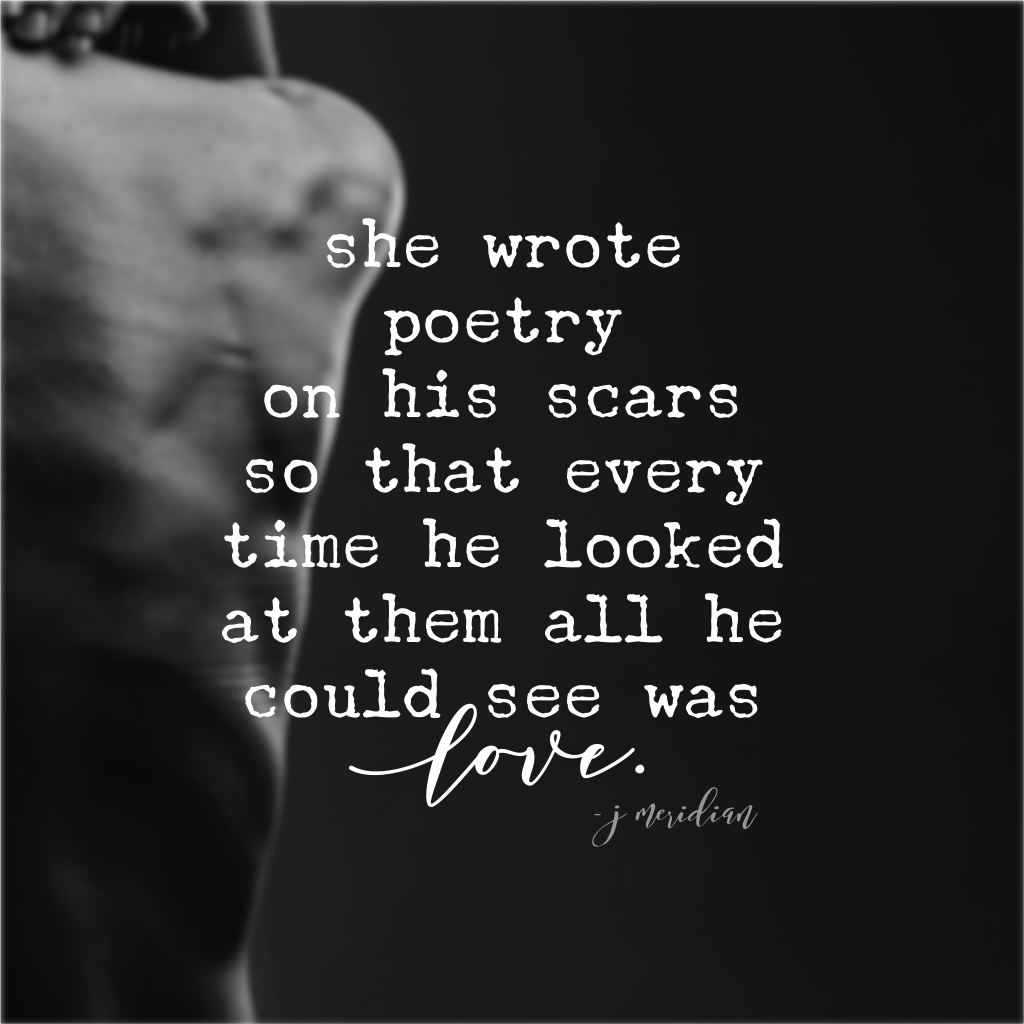
Then I thought about the emotional scars we have and how we, as adults, take our hurts and scars and hide them in our chest. Life is unpredictable, the way it can stretch, and rip, and pull us from every side. But the way we love, have the ability to “write poetry” onto these hurts and scars, so that every time we look at them, we see through that, and all we see is
strength and L O V E.
The way we love and listen to each other, the way we love and stop to listen to ourselves is the most important and precious path to healing and understanding. I think so many times, we aren’t even aware of what we need, until it is right in front of us.
That is why it is so important to be able to lift each other up, speak the good, see the beauty, write poetry on scars. Take time to listen. Take time to be. Take time to let your love and kindness fill your cup and eventually spill over on to others. ♡ ~ julie
 becoming beautifully unbroken